

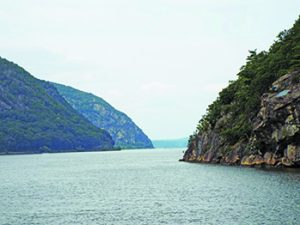
Even prior to Henry Hudson’s voyage up the waterway that now bears his name, the Hudson River was an important transportation corridor, providing access to the interior of what would eventually become New York State. During the American Revolution, the strategic importance of the river quickly became evident, and both British and colonial forces made attempts to gain control of it. Although the Hudson is very wide at many points, for a 20-mile stretch between Beacon and Peekskill, it winds its way through the rugged hills known as the Hudson Highlands. It was in this region that several fortifications were established by both sides in the conflict, in preparation for the inevitable confrontation.
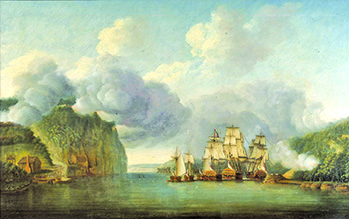
In the summer of 1777, the British developed a plan to divide American forces by taking control of the Hudson River valley, thereby cutting off New England from the rest of the colonies. General John Burgoyne led troops south from Montreal, facing American General Gates at the first Battle of Saratoga on September 19, 1777. Although he was victorious, Burgoyne still required reinforcements for a second engagement. According to the British plan, Colonel Barry St. Leger’s troops were to march eastward through the Mohawk River valley, while Sir William Howe in New York was to send men up the Hudson River to rendezvous with Burgoyne near Albany. The execution of each of the three prongs of this attack was considered to be essential for its success.
Unfortunately for General Burgoyne, Colonel St. Leger had been forced to lay siege to Fort Stanwix in Rome, and he retreated to Canada after meeting strong resistance there in mid-August. In the meantime, General Howe launched an expedition to attack Philadelphia, leaving behind troops under the command of Lt. General Henry Clinton to protect New York. At the urgent request of Burgoyne, General Clinton set sail from New York with an army of several thousand men in a small fleet of warships. Ahead lay the Hudson Highlands, which were defended by members of the colonial militia.
About two miles above Peekskill, at the bend where Popolopen Creek flows into the Hudson, the colonists had established two forts on opposite banks of the creek. Perched high above the water on the western shore, the cannons of Fort Montgomery and Fort Clinton protected several narrow miles of the river. In addition, a large iron chain had been stretched from Fort Montgomery across the Hudson to the rocky outcrop known as Anthony’s Nose, preventing the passage of British vessels. Instead of sailing rapidly to Burgoyne’s aid, General Clinton was forced to plan an assault on the colonial positions in the highlands.
On October 6, 1777, Clinton’s forces landed just south of the forts and moved quickly to attack them from the west. At the same time, British warships began bombarding the American positions. The colonial soldiers were greatly outnumbered, and the forts were soon overrun and destroyed. The following morning, the chain across the river was removed, and the British fleet sailed northward. However, General Burgoyne had been unable to wait any longer, and as the reinforcements departed from their victory at Fort Montgomery, he had already launched a second attack on the Americans. The second Battle of Saratoga resulted in a British defeat, and upon receiving word of Burgoyne’s surrender, Clinton ordered his fleet to return to New York. Although Fort Montgomery and Fort Clinton had been lost, their defense had played an important role in securing Gates’ victory at Saratoga.

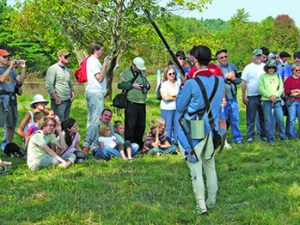
Photo courtesy of NYS Parks, Recreation & Historic Preservation
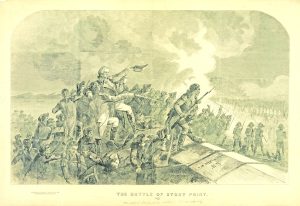
In May of 1779, the British returned to once again seize control of the river, this time taking Stony Point at the southern entrance to the Hudson Highlands. Here, a fort was constructed on the rocky peninsula that overlooked the King’s Ferry, the main route for colonial troops and supplies between New England and the south. Surrounded by the river on three sides and a tidal marsh to the west, the British occupied an almost impenetrable position that gave them military control over the region. While George Washington did not want to risk the entire continental army in an attempt to regain this strategic location, he authorized General Anthony Wayne to assemble a force of one thousand men to attack Stony Point.
On July 15, 1779, Wayne’s troops were joined by the Massachusetts Light Infantry for a long march over Dunderberg Mountain. Shortly after midnight, the colonial forces arrived at Stony Point and split into three groups, with a plan to wade across the marshes at low tide. Facing a superior British position, General Wayne’s strategy was to use the element of surprise, and he ordered all muskets to be unloaded, to avoid the possibility of a stray shot alerting his foes. Attacking with fixed bayonets, the Americans stormed the fort, quickly overwhelming its defenders. After only fifteen minutes of bloody fighting, the British surrendered, and Wayne sent the message to General Washington that “the fort and garrison are ours. Our officers and men behaved like men who were determined to be free.”
During the following day, British reinforcements began to arrive at Fort Lafayette on the opposite shore, and it became obvious that the continental soldiers would not be able to hold their position. After removing supplies and almost 600 prisoners, General Wayne evacuated and burned the buildings at Stony Point. On July 20, 1779, the British reoccupied the area and began to rebuild the fort. However, the battle had boosted American morale and had demonstrated that a significant British force would be required to maintain control of this location. With his resources spread thin, in October of 1779, Sir Henry Clinton once again ordered a withdrawal from the Hudson Highlands. Although other important events in the revolution later took place in this region, this was the last major military conflict that occurred along this part of the Hudson River.
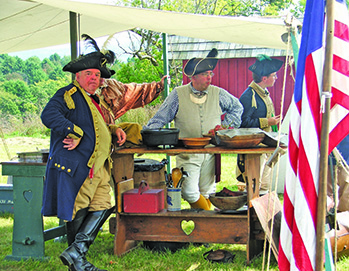
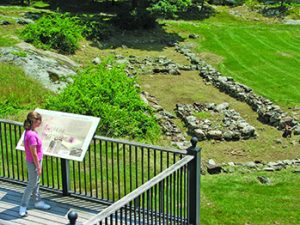
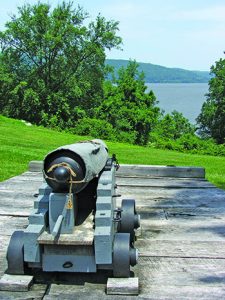
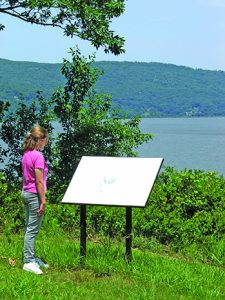
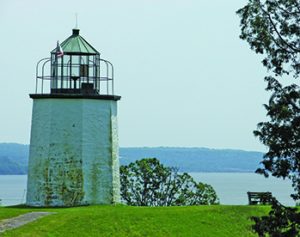
Today, the Stony Point and Fort Montgomery battlefields are preserved as New York State historic sites, both located near the Bear Mountain Bridge on Route 9W. At Stony Point, a path winds its way around the remaining earthworks, providing visitors with a panoramic view of the entrance to the Hudson Highlands and Haverstraw Bay. Interpretive signs highlight the key events of the battle, and a small museum contains displays of original artifacts. Demonstrations are held in a recreated military encampment, including blacksmithing, cooking, and artillery firing. Another feature of the Stony Point park is the restored 1826 lighthouse, which is the oldest of many historic lighthouses that line the Hudson River. Stony Point battlefield is open Wednesday through Sunday from April through October, with additional off-season hours depending on the weather. The museum is open from 10am to 4:30pm, Wednesday through Saturday, opening at noon on Sunday (the museum is currently undergoing renovations – check the site’s Facebook page for updates on closures). Visit https://parks.ny.gov/visit/historic-sites/stony-point-battlefield-state-historic-site for more information.
At Fort Montgomery, a visitor center offers a video program that outlines the history of the fort, and of the conflict that took place there. Maps and scale models depict the layout of the fortifications and the surrounding countryside, and uniformed mannequins stand guard over the exhibits. Extensive archeological research has taken place at this location over the years, and many objects discovered here are now on display. The battlefield itself is filled with the remains of earthworks and the foundations of the buildings that once housed colonial troops. Fort Montgomery is open Wednesday through Sunday, mid-April through October, from 10am to 5pm (opening at 1pm on Sundays). Visit https://parks.ny.gov/visit/historic-sites/fort-montgomery-state-historic-site for current information.
By David Hamilton
Discover more from NYPA Collector
Subscribe to get the latest posts sent to your email.