The section of the New York State Thruway that traverses the Mohawk River Valley is no doubt the most scenic segment of this highway, as it climbs over the rolling hills and skirts the water’s edge. In some places, it passes through small villages, but an equal number of towns lie just out of sight across the river. Little Falls is one of those communities, marked by a sign but largely out of view. Hidden behind the trees next to the exit ramp, and only visible from the canal or railroad line on the opposite shore, is the residence of a significant figure in the region’s history. The home of Revolutionary War hero General Nicholas Herkimer has been a landmark in the valley since the mid-18th century. Today, as a part of the Herkimer Home State Historic Site, the mansion has been restored to its original appearance and is open for public tours.
Johan Jost Herkimer was among the many Palatine Germans who settled in the Mohawk Valley during the early part of the 18th century. In 1725, he purchased land along the banks of the river, between present-day Herkimer and Little Falls, that included the strategic portage route for carrying batteaux around the rapids and the falls. In 1752, his son Nicholas established a small farm at the east end of the tract. Although the elder Herkimer still maintained control of the portage, Nicholas was able to develop a profitable trading business in addition to his farming endeavors. In a very short time, he became one of the wealthiest and most influential residents of the region, and in 1764 he constructed a large Georgian-style mansion on the estate.
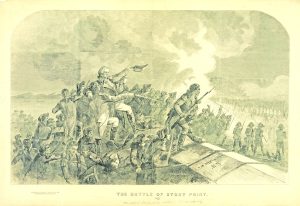
A former militia captain in the French & Indian War, Nicholas Herkimer was elected chairman of the Tryon County Committee of Safety and was appointed Brigadier-General of the county militia at the outbreak of the American Revolution. The Mohawk Valley was the scene of many skirmishes between Loyalists and Patriots during the early years of the conflict, and the hostilities escalated during the summer of 1777. On August 4th of that year, General Herkimer mustered over 800 members of his militia and 60 allied Oneida warriors, and marched toward Fort Stanwix in Rome, which had been under siege by British forces. Two days later, as Herkimer’s troops made their way through the woods near the Oneida village of Oriska, they were ambushed by a large group of Loyalists and Mohawk warriors.
During the six-hour Battle of Oriskany, which consisted mostly of hand-to-hand combat, General Herkimer suffered a serious wound to the leg, but he continued to command his troops while propped up against a tree. The militia managed to hold their ground, and following the battle, Herkimer was carried back to his home. While his wounds were not immediately life-threatening, his leg became infected, and it was amputated during the following week. A poor job by the surgeon resulted in further complications, and on August 17, 1777, Nicholas Herkimer calmly read several passages from the family bible and quietly passed away. While Herkimer felt that his military mission had failed, his engagement of Loyalist forces bought additional time for Fort Stanwix until American reinforcements arrived on August 23rd, and he was immediately recognized as a hero for his bravery and dedication to the Patriot cause.
Herkimer was laid to rest in the family burial ground, located on the estate near the mansion. The grave remained unmarked until a relative purchased a headstone in 1847, and a large monument was erected on the site in 1896, through the efforts of the Oneida County Historical Society. The buildings and property were left to Herkimer’s brother George, and they remained in the family until 1814. Over the years, the main house was remodeled on numerous occasions, and after changing hands several times, it fell into a state of disrepair.
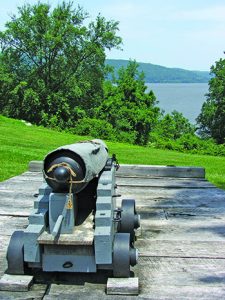
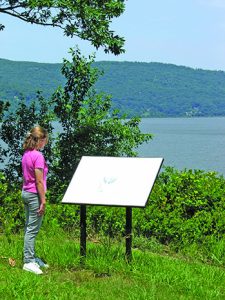
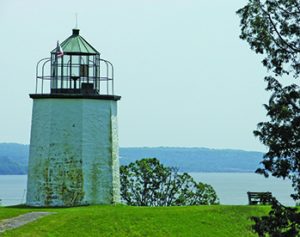
In 1913, the home and grounds were purchased by New York State, and preservation efforts began during the following year. A major restoration project was undertaken in the 1960s, returning the building to its 18th century appearance. Its rooms were carefully restored to their original configuration and are now filled with period furnishings and original Herkimer family artifacts. Visitors to the Herkimer Home State Historic Site are able to experience the mansion as it existed when Nicholas Herkimer met with trading partners, entertained family members, and drew up plans for the militia. A restored kitchen, gardens, and displays of household implements and tools offer a view of life during colonial days.
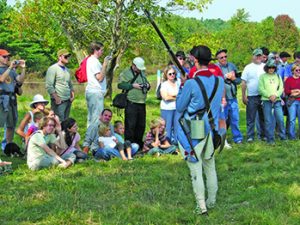
A 1970s-era visitor center is currently being replaced with a new, modern one, which is expected to open in 2027. The current center contains exhibits on the history of the region and the Herkimer Family and includes a short video presentation on the role of Nicholas Herkimer in the American Revolution. Educational and “hands-on” programs for children, and other special events are held throughout the season, including tours, militia reenactments, and holiday celebrations. A research library is available for serious historians, and a small gift shop offers a variety of books and souvenirs that will be of interest to all visitors.
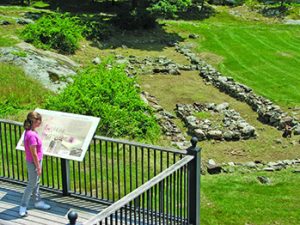
The grounds around the Herkimer Home State Historic Site have changed little from the 18th century, although there is evidence of the original Erie Canal and West Shore Railroad visible from the path that leads down to the river. Strolling around the farm past the old stone well, it is easy to imagine stepping back in time to 1770, until the distant sound of a tractor trailer on the Thruway brings you back to the present. The Herkimer home is also only a few miles from downtown Little Falls, with its antique shops and Erie Canal historic sites.
The Herkimer Home State Historic Site is open from Memorial Day through early October, Wednesday through Sunday, with hourly tours conducted from 10am to 4pm. There is a $4 admission fee for adults, with children under 12 admitted for free. The park is located on NY State Route 169, just off New York State Thruway Exit 29A. For current information, visit https://parks.ny.gov/visit/historic-sites/herkimer-home-state-historic-site.
The location of the Battle of Oriskany is marked by an 85-foot-tall monument that was dedicated in 1884. The surrounding five acres were later acquired by New York State, and the area has now been preserved as the Oriskany Battlefield State Historic Site. A small visitor center offers displays and kiosks that tell the story of the battle and serves as the starting point for guided tours. Visitors are also able to tour the park at their own pace, by following a trail map that outlines a path around the battlefield, with key locations marked by interpretive signs and historic markers.
Located on NY State Route 69, just west of the Village of Oriskany (about halfway between Utica and Rome), the battlefield is open year-round from dawn until dusk. The visitor center is open from late May to early October, Wednesday through Sunday, from 10am to 4:30pm. For more information, visit https://parks.ny.gov/visit/historic-sites/oriskany-battlefield-state-historic-site.
While the Battle of Saratoga is recognized as the turning point of the American Revolution, the battles that were fought on the other fronts of the three-pronged campaign by the British also contributed to the cause. Despite suffering a defeat at Oriskany, General Herkimer’s militiamen and their Oneida allies successfully defended the Mohawk Valley and supported the resistance of Fort Stanwix to the British siege. Although perhaps not receiving as much attention in the history books, the heroes of the Battle of Oriskany played an important role in what later ended up being a pivotal American victory.
Discover more from NYPA Collector
Subscribe to get the latest posts sent to your email.